Advancing In-Orbit Autonomy: The Precision of China’s Space Station Experiments
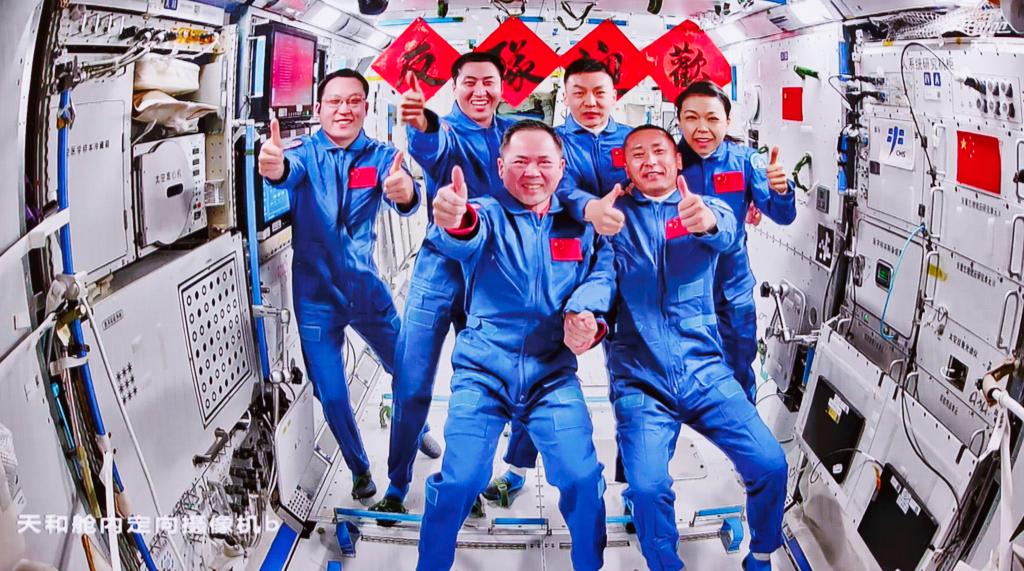
The successful testing of an upgraded in-orbit mass measurement device by the Shenzhou-23 crew marks a critical milestone in long-term human spaceflight sustainability. As the mission nears its 50th day of an ambitious one-year duration, the focus has shifted from basic station maintenance to high-precision human research. The ability to accurately quantify mass in a microgravity environment is a foundational requirement for life science experiments, particularly when tracking the physiological impact of long-duration space flight on muscle atrophy and bone density. Without such specialized hardware, monitoring metabolic efficiency and physical health—which fluctuate significantly over a 365-day mission cycle—would be subject to unacceptable margins of error.
The data being generated by the crew—specifically regarding plantar pressure, lower-limb biomechanics, and muscle-tendon interaction—is essential for developing countermeasures against the degradation of physical performance in space. We are looking at a complex set of variables here: collecting high-fidelity motion images and joint kinematics data while the crew performs resistance exercises allows researchers to calculate real-time load distribution. This is about more than just maintaining current fitness; it is about establishing a repeatable baseline for future interplanetary exploration, where physical stability is a non-negotiable safety parameter. As reported by People's Daily, the integration of near-infrared brain functional imaging further expands the scope of these trials to include cognitive control, ensuring that as mission duration increases, the human factor—the "operator" of the station—remains sharp and reliable under high-stress, multi-task paradigms.
From an engineering standpoint, the complexity of these operations cannot be overstated. Every percentage point of gain in the accuracy of these measurements reduces the risk of long-term physiological injury to the crew. By effectively managing the load-bearing requirements of the human body through rigorous daily exercise protocols and real-time biomechanical analysis, the Shenzhou-23 team is essentially creating a roadmap for human endurance in the harsh, low-gravity environment of low Earth orbit. This data-heavy approach to space health management is exactly what is needed for the next phase of space station utilization, where the focus will increasingly be on long-term sustainability and high-output scientific research rather than just presence.
News source: https://peoplesdaily.pdnews.cn/china/er/30052643839