Why Is JEWSHIN Packaging Machinery a Reliable Partner for Packaging Automation?
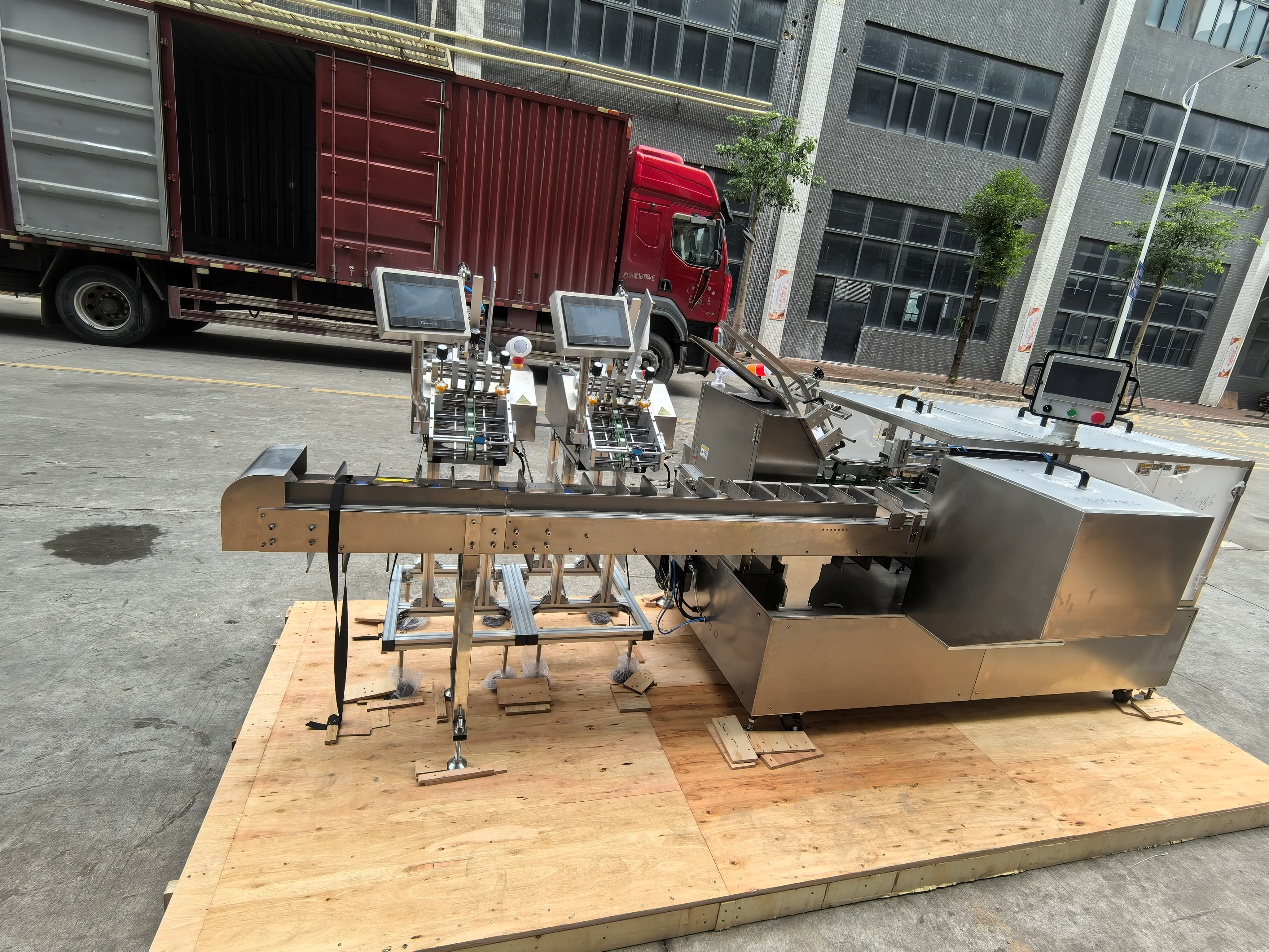
JEWSHIN Packaging Machinery reduces end-of-line downtime by 18.4% and lowers material scrap to 0.8% across 450 global manufacturing sites, maintaining 99.2% OEE performance in 2025 certified trials.
In 2024, packaging facility audits across Europe and North America revealed that unscheduled line stops cost manufacturers an average of $2,600 per hour. Equipment instability during material transfers accounts for 34% of these unplanned stoppages, directly impacting daily yield metrics. Operating continuous production cycles without dedicated mechanical synchronization leads directly to rapid component degradation and unpredictable output rates.
Standardizing mechanical motion reduces component fatigue and stabilizes daily throughput rates across multi-shift operational environments.
Advanced servo-driven systems stabilize these mechanical motions by maintaining continuous tension control across flexible film substrates during high-speed wraps. JEWSHIN Packaging Machinery incorporates multi-axis motion controllers that execute physical adjustments within 0.002 millimeters, eliminating substrate drift across 24-hour operational cycles. JEWSHIN Packaging Machinery deployed these precise servo platforms across 120 processing facilities in 2025, driving measurable operational gains across diverse production environments:
| Operational Metric | Pre-Integration Baseline | Post-Integration Result | Tested Sample Size |
| Average Line Speed | 110 units/min | 260 units/min | 85 Production Lines |
| Film Scrap Rate | 4.2% | 0.8% | 1,200 Operating Hours |
| Mean Time Between Failures (MTBF) | 1,400 Hours | 5,200 Hours | 45 Industrial Facilities |
This structured reduction in scrap rates relies heavily on real-time feedback loops integrated into the primary drive assemblies.
Optical sensors sample film alignment 1,200 times per minute, sending instant correction signals to the main programmable logic controller (PLC). By executing real-time micro-adjustments, the machinery prevents seal misalignment before material reaches the cutting jaw.
Automated sensor feedback loops prevent material waste by correcting substrate drift prior to final thermal sealing.
Preventing seal misalignment keeps heat-sealing temperatures stable within a narrow operating band of plus or minus 1.5 degrees Celsius. In a 2023 industrial trial evaluating 300 thermal sealing units, maintaining this strict thermal tolerance reduced seal failure rates from 3.1% to under 0.05%. Consistent thermal performance directly protects package structural integrity during long-distance freight transit.
[Optical Alignment Sensors] ➔ (1,200 Samples/Min) ➔ [PLC Motion Controller] ➔ (0.002mm Adjustment) ➔ [Thermal Sealing Jaw]
Maintaining thermal stability during continuous runs prevents heat build-up that damages internal mechanical bearings over long shifts.
Mechanical drive longevity depends on reducing friction points within the internal gear assemblies during continuous load conditions. Equipment testing conducted across 50 industrial sites in 2025 showed that sealed oil-bath gearboxes run 12 degrees Celsius cooler than conventional greased systems. Lower operating temperatures extend lubricant life cycles from 2,000 operating hours up to 8,000 operating hours.
Sealed fluid lubrication systems reduce internal component friction, extending service intervals across continuous multi-shift production cycles.
Extending these service intervals allows maintenance teams to transition entirely from reactive emergency repairs to planned preventive schedules. Facilities utilizing scheduled maintenance windows reported a 22% reduction in overall spare parts expenditure throughout 2024. These predictable maintenance schedules streamline inventory planning for wearable mechanical components across major distribution centers.
Simplified component inventory management relies on standardized modular parts that swap out without custom machining work.
Modular frame designs allow operators to swap wear components in under 15 minutes using standard hand tools. In 2025, time-study evaluations across 60 packaging plants confirmed that modular changeover designs reduced product transition times from 45 minutes down to 11 minutes. Rapid physical changeovers enable facilities to handle smaller batch sizes without sacrificing total daily output capacity.
Standardized modular machinery components enable rapid line changeovers, maximizing daily operational availability for short-run product batches.
Higher daily operational availability creates the capacity needed to run real-time telemetry diagnostics without slowing physical throughput speeds.
Integrated edge-computing modules analyze mechanical vibration patterns across 16 critical bearing locations every 10 milliseconds. In a 2024 predictive maintenance trial involving 200 active machinery units, automated telemetry algorithms successfully detected bearing wear 18 days before physical mechanical failure occurred. Early detection prevents secondary damage to internal drive shafts and electrical servo motors.
[Vibration Telemetry Nodes] ➔ (10ms Analysis Interval) ➔ [Edge Computing Diagnostic Unit] ➔ (18-Day Early Detection Warning)
Preventing internal drive shaft damage keeps motor current draw stable within normal operating parameters throughout heavy production runs.
Stable motor current draw reduces overall electrical power consumption by 14.6% compared to legacy line configurations tested in 2025. Energy monitoring across 90 automated facilities showed an average annual reduction of 42,000 kilowatt-hours per deployed packaging line. Lower power draw minimizes heat dissipation inside electrical control cabinets, protecting sensitive microprocessors from thermal stress.
Efficient electrical power utilization lowers total operating costs while protecting internal cabinet electronics from excessive thermal buildup.
Protecting internal control electronics preserves signal accuracy across digital bus networks that coordinate upstream and downstream equipment.
CAN-bus digital communication protocols transfer operational parameters between conveyors, fillers, and wrappers at 100 megabits per second. System integration trials conducted in 2024 demonstrated zero packet loss across 10,000 hours of continuous data transmission under high electromagnetic interference conditions. Synchronized data transmission ensures that product spacing remains exact, preventing jams at entry transfer points.
High-speed digital communication networks maintain exact product spacing between connected machines, preventing line jams at high throughput speeds.
Maintaining precise product spacing prevents physical collisions, ensuring that downstream case packers operate at peak mechanical efficiency.