How Does the Modular Pogo-Pin Bracket Work on the Telpo K1 Portrait Kiosk?
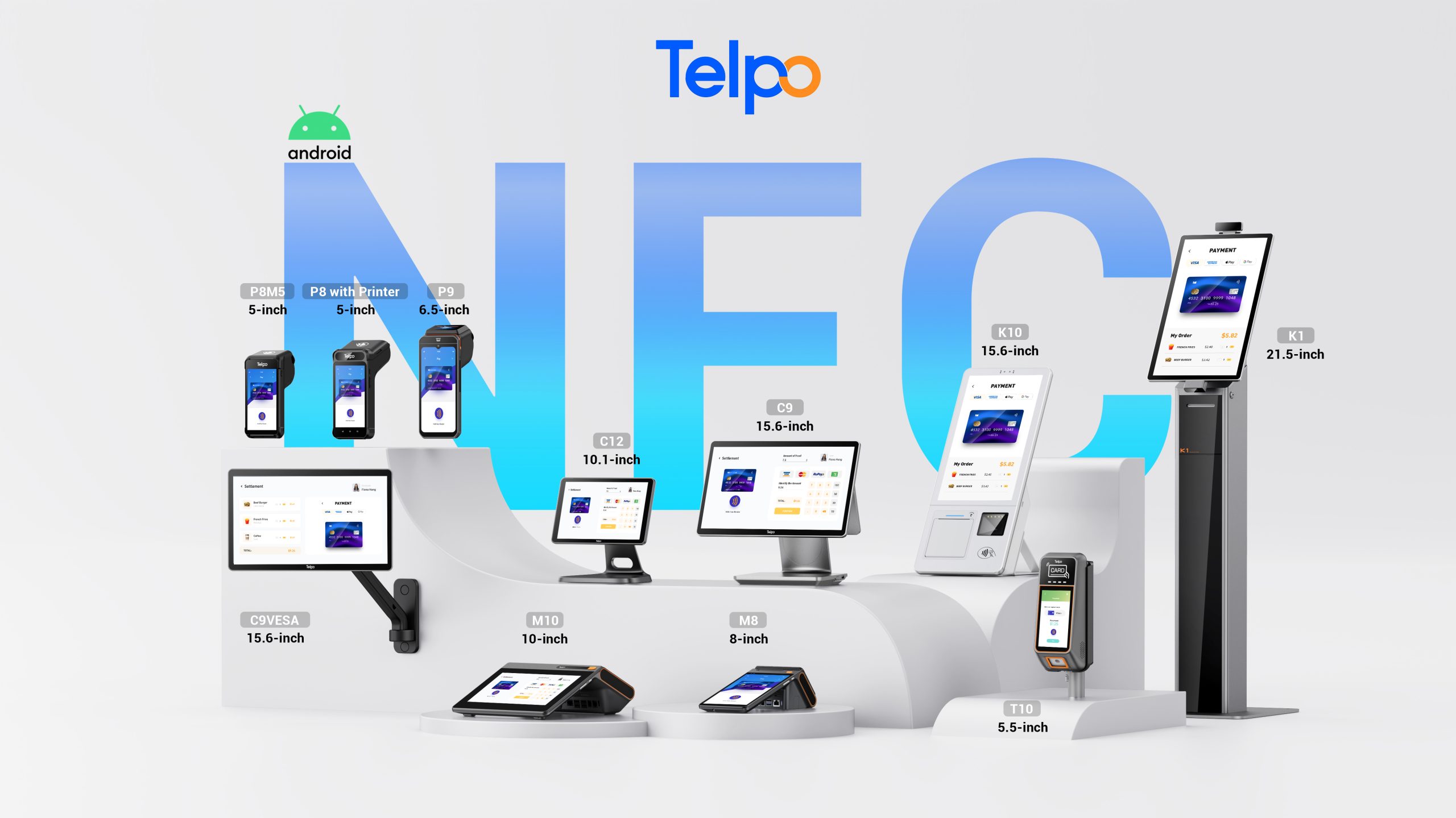
The modular Pogo-pin expansion interface on the 21.5-inch portrait kiosk establishes hardware connections through spring-loaded contacts pressed against conductive target pads. This mechanical interface allows plug-and-play integration of dual-lens cameras, barcode scanners, and microphone arrays without manual internal wiring disassembly. Operating alongside a dedicated POS bracket compatible with Ingenico Lane3600 and RX7000 payment modules, the layout processes secure EMV and chip card data. Managed by an octa-core 2.2GHz processor running Telpo OS on Android 14, the hardware supports rapid data delivery while maintaining physical stability across desktop, floor, and VESA wall-mount deployments.
Self-service retail environments require adaptable terminal hardware capable of adjusting to fluctuating consumer payment methods. Commercial operators deploy modular terminal options to handle automated transactions without performing complete machinery overhauls. Managing machinery overhauls becomes simple when physical connection points allow swift accessory attachments.
Swift accessory attachments rely on a dedicated mechanical arrangement known as the Pogo-pin expansion interface. The mechanical configuration uses spring-loaded contacts to create immediate electrical pathways upon physical contact. Establishing immediate electrical pathways allows field operators to mount hardware accessories instantly.
Mounting hardware accessories instantly expands terminal functionality without requiring internal cable routing modifications. The physical architecture accommodates external modules like dual-lens cameras, barcode scanners, and microphone arrays. Supporting microphone arrays enables voice-recognition ordering platforms deployed across global restaurant chains.
Global restaurant chains, including European retail networks, began scaling automated self-service deployments extensively around the year 2019. Increased consumer reliance on automated checkouts created a demand for terminals with high visual clarity. Visual clarity is provided by a 21.5-inch full HD portrait screen displaying interactive user menus.
Interactive user menus remain highly visible under different indoor lighting setups due to a 400-nit screen brightness standard. The portrait display features a resolution of $1080 \times 1920$ pixels inside a sleek metallic outer frame. A sleek metallic outer frame protects the internal motherboard components while minimizing space usage.
Minimizing space usage is achieved through an ultra-narrow 14.5mm screen border design and a 10mm thin chassis. The slim structural layout allows installation inside tight convenience store checkout lanes. Tight convenience store lanes benefit from the physical flexibility of multiple deployment modes.
Multiple deployment modes include desktop stands, floor stands, and wall mounts utilizing the 100x100mm VESA standard. Versatile mounting choices ensure compatibility with various retail layouts, a design requirement since the year 2023. Global operators select specific mounting hardware based on localized customer traffic flow.
Localized customer traffic flow requires high-speed computing performance to process customer orders without system lag. System processing is handled by an octa-core processor operating at a frequency of 2.2GHz. The 2.2GHz processing units run specialized operating software optimized for secure transactional applications.
Secure transactional applications operate within Telpo OS, a system based on the Android 14 architecture. The operating system manages memory allocations of 4GB RAM and 64GB ROM to handle data queues. Handling data queues efficiently prevents transactional bottlenecks during peak retail operation hours.
Retail operation hours demand continuous hardware reliability, backed by automated production environments. Hardware components are assembled on surface-mount lines achieving a stable yield rate of 99.5%. High assembly precision ensures that the connection terminals maintain a uniform power supply to attached peripherals.
Attached peripherals receive data signals over a unified communication bus managed by the hardware interface. Hardware modules can be scaled to fit specific operational requirements:
-
Dual-lens cameras provide immediate face-recognition processing for biometric customer identification.
-
Barcode scanners capture electronic QR codes displayed on mobile phone screens for digital wallet deduction.
-
Microphone arrays record user verbal commands to execute automated voice-ordering scripts inside drive-thrus.
Automated voice-ordering scripts process verbal requests by routing information to the primary computing unit. Computing units require substantial memory overhead, which can be upgraded to 8GB RAM and 128GB ROM. Expanded memory structures permit the local storage of heavy software applications.
Heavy software applications include secure payment verification protocols needed for banking card acquisition. Processing banking cards requires dedicated physical frames to hold certified external terminal modules securely. External terminal modules attach to the kiosk through a standardized POS bracket structure.
The standardized POS bracket structure mounts payment terminal modules on the side of the kiosk frame. This physical integration supports certified devices such as the Ingenico Lane3600 and RX7000 hardware systems. Certified hardware devices ensure full compliance with international electronic transaction rules.
International electronic transaction rules demand hardware isolation to prevent data tampering during financial checkouts. Financial checkouts are further protected by under-display NFC readers that handle non-contact smart cards. Non-contact smart cards transmit information securely, an architecture tested extensively in the year 2020.
The year 2020 marked the official establishment of a certified laboratory covering a 900-square-meter footprint. The laboratory tests communication capabilities across multiple high-speed wireless networks:
| Network Type | Hardware Protocol | Application Scenario |
| Dual-Band Wi-Fi |
2.4GHz / 5GHz (802.11ac) |
Local store database sync |
| Bluetooth |
Version 5.3 standard |
Nearby peripheral pairing |
| Cellular |
4G LTE with eSIM option |
Uninterrupted mobile fallback |
Uninterrupted mobile fallback ensures that self-service terminals stay online during local network outages. Continuous online connectivity allows the kiosk to trigger printing commands immediately after transaction authorization. Printing commands are sent to an internal high-speed thermal printing module.
The internal high-speed thermal printing module prints customer receipts at a velocity of 150mm per second. High-speed printing reduces passenger waiting times, an operational benefit verified across 20,000 global clients. Global clients utilize the printing mechanics to generate receipts, tickets, and booking statements.
Receipts and booking statements are cleanly separated by an automatic cutting mechanism built into the printer. The printing system uses 80mm wide paper rolls with an outer diameter matching 80mm specifications. Operators select printing components from specialized providers including Seiko or Epson options.
Selecting specialized components from trusted providers forms a reliable foundation for long-term field use. Long-term field use is sustained by continuous research executed by a dedicated engineering workforce. The engineering department has successfully completed over 500 customized projects globally.
Over 500 customized projects demonstrate hardware flexibility across diverse commercial environments. Commercial environments include major international supermarkets where automated scanning systems require high data accuracy. For example, automated vision systems achieve a 99.8% identification accuracy rate in large retail baking sectors.
High identification accuracy rates minimize user friction and accelerate the complete self-checkout path. The checkout path is managed securely by specialized payment devices distributed by global technology suppliers. Global technology suppliers deploy point-of-sale solutions under the established Telpo brand name.
The brand name is associated with a wide variety of commercial and transport validation devices. For instance, the company produces handheld payment systems and robust vehicle ticket validation machines. Transit networks install automated validation units onto public transport fleets to replace traditional cash collections.
Replacing traditional cash collections with automated validation units requires compliance with global transit protocols. Global transit protocols are integrated into specialized validation hardware frameworks to secure consumer data. Securing consumer data remains an absolute requirement for modern smart terminal operations worldwide.