A Pubic Hair Trimmer for Men by Body Area and Length Goal
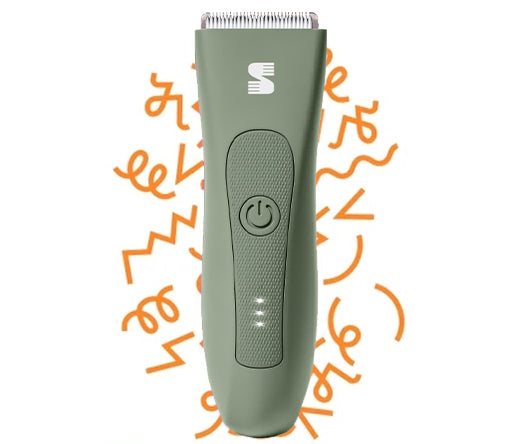
Choosing a trimmer for external pubic hair is mainly a question of control: where you plan to trim, how much hair you want to leave, and how carefully the tool must move around changes in body shape. A guarded trimmer is usually more useful for reducing length and managing larger areas, while a smaller trimming head may offer better control near edges and contours. Trying to get every area equally close can make the process harder than necessary. Start with a longer guard, work gradually, and stop if the tool pulls hair, repeatedly catches the skin, becomes uncomfortably hot, or causes persistent irritation.
Quick Answer
The right tool setup depends on the job you are asking it to perform. For broad areas, prioritize stable contact, predictable guard length, and efficient coverage. For curved or narrow areas, prioritize visibility, a manageable cutting head, and slower movements.
Your target length matters just as much as the body area. Long hair should normally be shortened in stages before any closer finishing work. Hair that is already short may only need a light maintenance pass. If the goal is simply a neat appearance, leaving a small amount of length can provide more room for controlled trimming than attempting a completely smooth finish.
Body-Area Matrix
External pubic hair does not grow across one flat, uniform surface. Different areas create different visibility, access, and control requirements, so they should not automatically receive the same tool setting or technique.
| Body area | Main trimming task | Useful tool role | Main consideration |
|---|---|---|---|
| Lower abdomen and upper pubic area | Reduce bulk across a relatively broad area | Guarded body trimmer | Even length and efficient coverage |
| Hairline and outer edges | Define where trimmed hair ends | Smaller or more maneuverable trimmer head | Visibility and controlled direction |
| Groin crease | Manage hair near a narrow body fold | Guarded trimmer used slowly | Limited space and changing surface angle |
| External scrotal area | Carefully shorten visible external hair | Highly controlled trimming with conservative settings | Loose, mobile skin and limited margin for error |
| Inner upper thigh | Blend pubic hair into surrounding body hair | Body trimmer with a selected guard | Avoiding an abrupt length transition |
The lower abdomen and upper pubic region often allow longer, straighter passes because the surface is easier to see and stabilize. A length guard can help prevent isolated patches from being cut much shorter than the surrounding hair.
Edges and creases require a different approach. Short strokes make it easier to respond when the body angle changes. A large cutting head may cover hair quickly, but it can also make precise boundary work more difficult.
The external scrotal area should be treated as a separate trimming task rather than an extension of the broad upper area. Loose skin can move toward the cutter, so aggressive pressure, rushed passes, and an unnecessarily close setting should be avoided. If you cannot clearly see and stabilize the area, stop rather than continuing by feel.
Length-Goal Matrix
A useful length goal describes the result you want without assuming that the closest possible cut is automatically better. More cutting closeness generally gives you less room to correct uneven pressure, poor visibility, or an unsuitable tool angle.
| Length goal | Practical approach | Suitable tool role | Common mistake |
|---|---|---|---|
| Reduce heavy growth | Begin with a longer guard and shorten gradually | Guarded trimmer | Starting at the shortest setting |
| Keep a neat, visible length | Use one consistent guard across the main area | Body trimmer with length comb | Repeatedly trimming the same patch |
| Create a shorter outline | Trim the main area first, then refine the border | Smaller trimming head | Defining the edge before controlling bulk |
| Prepare for closer finishing | Pre-trim long hair before using a closer tool | Trimmer followed by a separate finishing tool | Asking one tool to remove long hair and finish closely in one pass |
| Maintain an existing trim | Use light passes only where growth is uneven | Guarded maintenance trim | Recutting already-even areas |
For longer growth, the first pass should focus on reducing volume rather than producing the final appearance. Once the hair is shorter and easier to separate, you can judge whether another guarded pass is necessary.
For routine maintenance, avoid treating every session like a complete reset. Concentrate on areas where growth has become visibly uneven. This limits unnecessary passes and makes the result easier to control.
Tool Settings and Control
Begin with the longest guard that can reasonably reduce the current hair length. You can move to a shorter guard after checking the first result, but you cannot restore length that has already been removed. This staged approach is especially useful when you are uncertain how a particular guard will look on dense or uneven growth.
A tool intended for body and groin grooming should be judged by its practical role rather than by promises of extreme closeness. When evaluating a pubic hair trimmer for men, consider whether its available setup supports gradual length reduction, visible guard selection, and manageable movement around the areas you actually plan to trim.
The cutting head should remain in controlled contact without being forced into the skin. Pressing harder does not necessarily improve length consistency. It can reduce your ability to respond when the surface angle changes.
Trim in a position that gives you clear visibility and stable access. Stretching or supporting loose external skin may create a flatter working surface, but do not continue if you cannot maintain that control. Use slow, short passes near folds and contours, and clear loose hair when it begins to obstruct your view of the cutting path.
Wet and dry use should not be treated as interchangeable unless the tool is designed for the chosen condition. Dry hair can be easier to see and separate, while wet hair may lie flatter or collect around the guard. Follow the tool’s care and water-resistance instructions rather than assuming that rinsable parts make the entire device suitable for wet operation.
Scenario Examples
Reducing long growth
Start with a longer guard on the broad upper pubic area. Work in sections instead of repeatedly crossing the entire area. After the first pass, inspect the result and decide whether you need a shorter setting.
Move to creases and edges only after the main volume has been reduced. Shorter hair gives you a clearer view of the body contours and makes it easier to distinguish between general trimming and detail work.
Keeping a uniform short length
Choose one guarded setting for the main area and use light overlapping passes. Do not chase individual hairs immediately. Finish the larger section, brush away loose hair, and then identify genuinely uneven spots.
Where the pubic area transitions into the abdomen or thighs, consider whether a small difference in length will look more natural than a hard boundary. A slightly longer setting on adjacent body hair can produce a gradual transition.
Defining an outer hairline
Reduce the bulk first. Then identify the edge you want to maintain and work from the visible boundary toward the trimmed area. This direction helps limit accidental removal beyond the intended line.
Avoid making repeated adjustments without stepping back to inspect the overall shape. Small corrections can quickly become an uneven or overly narrow outline when viewed only from close range.
Preparing for a closer finish
Long hair should be pre-trimmed before any closer finishing method is considered. A trimmer handles length reduction, while a closer-cutting tool performs a different role. Combining both jobs into one rushed step can lead to clogging, pulling, or uneven contact.
A closer finish is optional rather than required. Stop at the guarded-trim stage when the hair already looks neat, when the area is difficult to stabilize, or when additional passes begin to cause discomfort.
Decision Checklist
Before choosing a trimmer or setting, confirm the following:
-
Which external body areas will you actually trim?
-
Is the main task bulk reduction, regular maintenance, edge control, or preparation for closer finishing?
-
What minimum length would still meet your grooming goal?
-
Can you clearly identify the selected guard before starting?
-
Is the cutting head manageable around narrow or curved areas?
-
Can removable guards and cutting components be cleaned according to the manufacturer’s instructions?
-
Does the tool remain comfortable to hold and control throughout the session?
-
Are you prepared to stop when visibility, skin control, or tool performance becomes unreliable?
A sensible choice gives you enough control to adjust the result gradually. Use a guarded setting for the main length, change tools or techniques only when the body area requires a different role, and avoid making closeness the only measure of performance. A controlled, maintainable trim is usually more practical than removing as much hair as possible in one session.